
By Fallas Landscape | Summer 2026 | Serving Plano, Frisco, McKinney, Allen & the Greater DFW Area
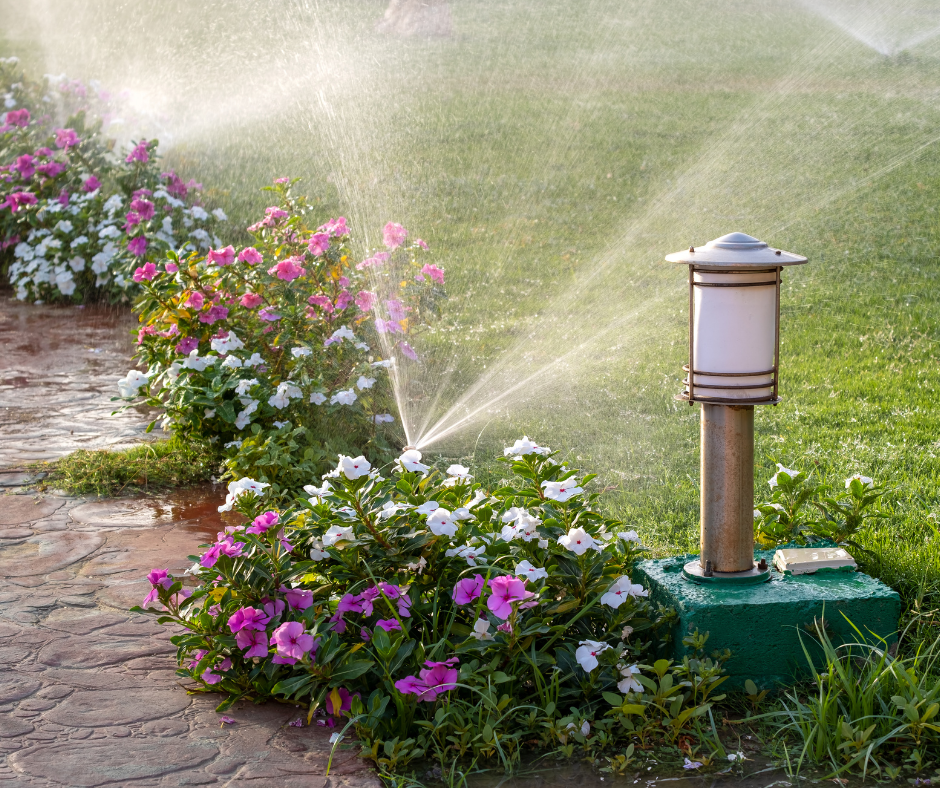
It starts with the best of intentions.
The thermometer hits 103°, you look out at your St. Augustine grass, and the instinct kicks in: it needs water. A lot of it. So you run the sprinklers longer, crank the schedule up to twice a day, and keep at it all month — because surely more water means a healthier lawn in this heat.
But here’s what most DFW homeowners don’t realize until it’s too late: overwatering a lawn during a Texas heat wave doesn’t save it. It silently destroys it.
By the time August rolls around, you’re looking at patches of brown turf, soggy root zones that can’t absorb oxygen, fungal growth spreading across your yard — and a water bill that’s climbed $400 to $600 higher than it should be. That’s the $500 mistake, and it’s one of the most common calls we get every summer.
“The lawn doesn’t need as much water as you think — it needs smarter water.”
Why More Water Is the Wrong Answer in Extreme Heat
Here’s the counterintuitive truth about Texas summer lawns: when temperatures consistently exceed 95–100°, your grass goes into a mild stress mode. This is completely normal — it’s the turf’s way of protecting itself. Watering excessively during this period doesn’t snap it out of stress. It makes things worse.
When soil stays saturated for too long, a few damaging things happen simultaneously:
- Root suffocation — Grass roots need both water and oxygen. Waterlogged soil pushes out the oxygen, starving roots even while they’re sitting in moisture.
- Fungal disease — Warm, wet conditions are the ideal breeding ground for brown patch, take-all root rot, and gray leaf spot — three of the most destructive lawn diseases in North Texas.
- Shallow root development — Grass only grows roots as deep as it needs to find water. Constant surface moisture trains the roots to stay shallow and weak, leaving the lawn far more vulnerable to drought stress when you actually do cut back.
- Wasted water — A significant portion of overwatered irrigation never reaches the root zone. It evaporates in the midday heat or runs off into the street, doing nothing useful and costing you real money.
What DFW Lawns Actually Need in July
The goal in summer isn’t to keep the soil constantly moist. It’s to water deeply and infrequently — giving the roots a full drink, then letting the soil dry slightly before watering again. This encourages roots to grow deeper chasing moisture, which makes the entire lawn more drought-resilient over time.
For most North Texas lawns in peak summer, here’s a practical framework:
- Water 2–3 times per week maximum, not daily.
- Run each zone long enough to apply about 1 inch of water total per week, split across those sessions.
- Water early in the morning — ideally between 4 a.m. and 8 a.m. — so the grass dries before afternoon heat sets in. Evening watering dramatically increases fungal risk.
- Watch the lawn, not the calendar. If you see bluish-gray coloring or footprints staying visible in the turf, that’s a sign of drought stress. If you’re seeing mushrooms, slimy patches, or unusual browning in circular patterns, that’s overwatering or fungal activity.
Your sprinkler controller is not set-and-forget. It should be adjusted month by month — and ideally week by week — based on rainfall, temperature, and what you’re actually seeing on the ground.
Pro tip: A simple rain gauge placed in your yard is a $10 investment that can save you hundreds in wasted water. If it registers half an inch from rain, skip your next scheduled watering session.
The Signs You’re Already Overwatering
Most homeowners don’t catch overwatering until the damage is visible. Here are the early warning signs to watch for in July:
- Spongy or soft turf that feels like walking on a wet sponge
- Yellowing grass that doesn’t improve despite watering
- Visible mushrooms or algae in the lawn
- Water pooling or runoff during irrigation cycles
- A water bill noticeably higher than the same month last year
- Brown circular patches forming — often a sign of brown patch fungus driven by overwatering
If you’re seeing two or more of these at the same time, it’s worth pulling back irrigation immediately and letting the soil dry out for a few days before resuming a more conservative schedule.
What About Newly Installed Sod or Landscaping?
New sod, transplanted shrubs, and recently installed plants are the exception to the rule above — they do need more frequent water during establishment, especially in summer. However, “more frequent” still doesn’t mean constant saturation.
For new sod installed in summer:
- Water daily for the first 2 weeks, but lightly — just enough to keep the top inch of soil moist
- Transition to every-other-day watering in weeks 3 and 4
- By week 5–6, begin shifting toward a normal deep-and-infrequent schedule
If you’re unsure whether your new install is getting enough or too much, look at the edges of the sod pieces. Curling or browning at the seams usually means too little water. A persistent dark, wet look to the soil usually means too much.
The Real Cost of Overwatering in DFW
We mentioned $500 — here’s how that number adds up for a typical DFW homeowner:
- Water bill overage from excessive irrigation: $200–$350 over a single summer month
- Fungicide treatments for preventable lawn disease: $80–$200
- Aeration and recovery work if soil becomes compacted and anaerobic: $150–$300
- Replacement of turf or plants that didn’t survive: $100–$500+
That’s a wide range, but the pattern is consistent — what starts as an instinct to protect the lawn ends up costing significantly more than a correctly calibrated irrigation schedule would have.
The good news: all of this is preventable. And if you’re already seeing signs of overwatering damage, most North Texas lawns can recover with the right care before the end of summer.
How Fallas Landscape Can Help
We work with homeowners across Plano, Frisco, McKinney, Allen, and the surrounding DFW area to get irrigation dialed in correctly for every season — not just set once and forgotten.
Our team can evaluate your current watering schedule, check your sprinkler system for coverage gaps or broken heads wasting water, and set you up with a summer maintenance plan that keeps your lawn healthy without running your bill up unnecessarily.
If your lawn is already showing signs of overwatering damage, fungal activity, or stress from improper irrigation, we can assess what’s happening and recommend the right corrective steps — whether that’s adjusting your schedule, treating for disease, or planning a targeted recovery program.
Ready to stop guessing and start protecting your lawn?
Call Fallas Landscape at 972.517.LAWN (5296) or reach us at info@fallaslandscape.com. We offer free estimates and serve homeowners throughout the greater DFW area.
Your lawn works hard to survive a Texas summer. Make sure your irrigation schedule is working with it — not against it.